

Eye movements, balance and reaction training app for practitioners & their clients
You customize. They train. Everyone sees the progress.
Download the app
Built by Clinician and Researcher, Melissa Biscardi, RN, DOMP, PhD

Gaze Stability
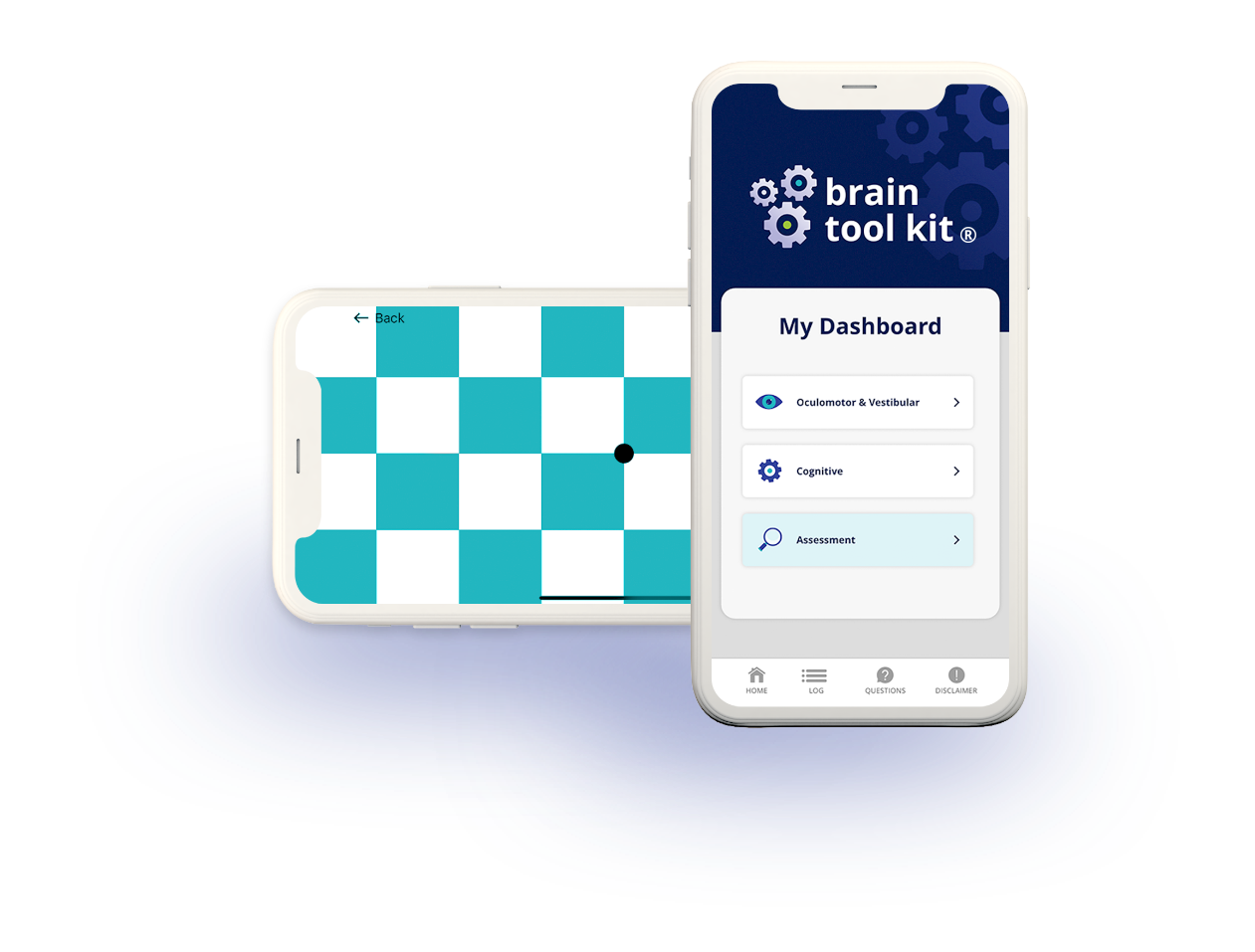
The foundation of eye function requires that our eyes are able to focus on an image and have it be stable on the retina. Use this exercise to train gaze stability by focusing on the centre dot for different timeframes.

Saccade
A saccade is a quick ‘jump’ eye movement such as the movements your eyes make when reading as they jump from word to word. Saccades are primarily generated in the front part of your brain known as the frontal lobe and the parietal lobe. However, saccades involve a precise coordinated effort of many parts of your brain.


Download the app
Eye movements, vestibular training, memory challenges and more.

Stroop
The Stroop effect is a neuropsychological activity that challenges the brain by providing it with contrasting stimuli that it must make sense of. The delay that happens is due to the brain trying to inhibit cognitive interference.

Pursuit
A smooth pursuit eye movement allows the eyes to closely follow a moving target. For example, if your eyes are following a hockey puck, a car driving by or a beautiful bird flying around then they are doing a smooth pursuit. Smooth pursuits are primarily generated in the part of your brain known as the parietal lobe, however they involve a precise coordinated effort of many parts of your brain.
Don’t miss out on our tutorials!
Words From Our Users
Brain Tool Kit helps clinicians transform lives — here are just a few success stories.
-
![An ice hockey goalie wearing a helmet and jersey, winking and smiling.]()
“The Brain Tool Kit helped me heal from exercise intolerance by incorporating the cognitive games into my stationary bike phase of the protocol. Brainy Trail forced my brain to master double tasking and be better prepared and acclimated to on ice drills. After struggling with other rehab methods, this app is what helped me progress through the protocol symptom-free and make a full return to play.”
– Matt O’Connor, Goaltender
-
![A woman wearing a headlamp pointing at a dental drill in a clinical setting.]()
“I am a concussion therapist and use these exercises with almost all of my patients. Besides it being an easy tool to use for my assessments, it’s also an easy tool for my patients to use at home for their exercises. Definitely recommend it if you’re a concussion therapist!”
— Sonia Vovan, All in Your Head PT
-
![A woman with shoulder-length brown hair smiling and laughing against a light pink background.]()
“I am a chiropractor applying Functional Neurology with all of my patients and I use Brain Tool Kit with my patients DAILY! It is easy to use, covers so many treatment applications and I can send patients home with their exercises on it, ensuring the best patient results. It is a staple in my practice now.”
— Dr. Rachel Frontain, Anew Chiropractic
-
![A man in a blue suit and glasses smiling at the camera]()
“I really think this is a valuable app for all functional neurology providers to utilize for OKN training.”
— Dr. Jeremy Schmoe, The Functional Neurology Center
-
![A smiling man with short, light brown hair, wearing a black shirt, against a light background.]()
“Brain Tool Kit is the best app available for anyone working in the brain rehab space. It is easy to use, has lots of functionality and is affordable for patients to purchase and use on their own device. Highly recommend.”
– Dr. Dylan Rogers, Frontenac Chiropractic
-
![A smiling young woman with long brown hair, wearing a white blazer and a blue top, standing against a cloudy sky background.]()
“I love this app! It is my go to when I have to assign homework to patients and I need them to be specific about their training. I especially love that there are memory saccades. I use those all the time for myself and patients.”
– Dr. Michelle Eisenmann, Resiliency Brain Health





Download the app
Your easy-to-use app for eye movements, vestibular training, visual attention and more

Optic Pursuit
Optic pursuit is a visuomotion activity where a selection of targets appear on the screen with distractors. As the targets move, the user must use focus, visual attention, working memory and more to complete the task.
Subjective Visual Vertical (SVV)
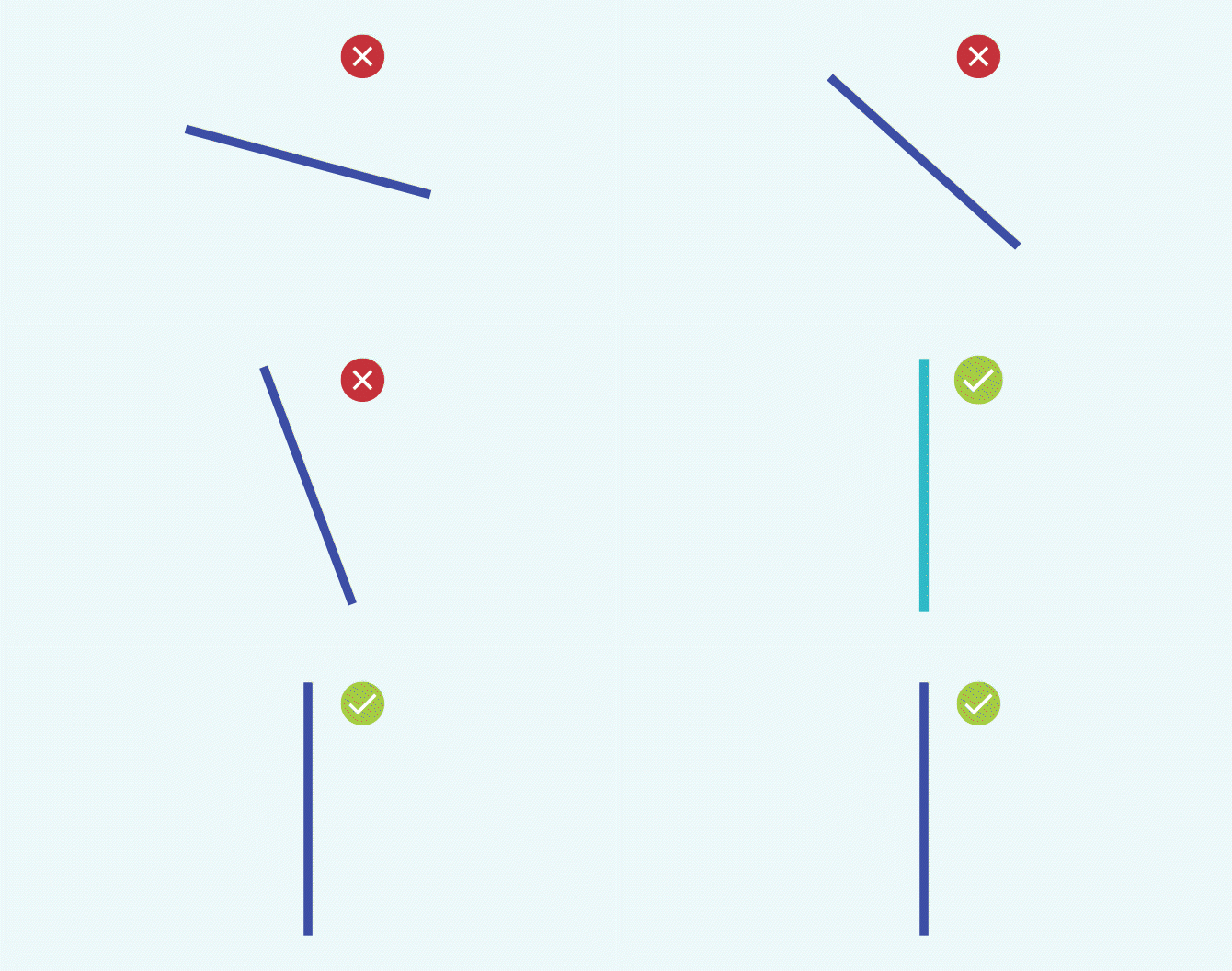
The SVV test assesses one’s perception of vertical which can sometimes be disrupted. The user must orient a line to what they perceive is precisely vertical and obtains a result of accuracy.

Concentration
Concentration is your ability to focus on or attend to the task at hand. It may be a work task, a conversation or simply going from one room to another to get something.
Memory
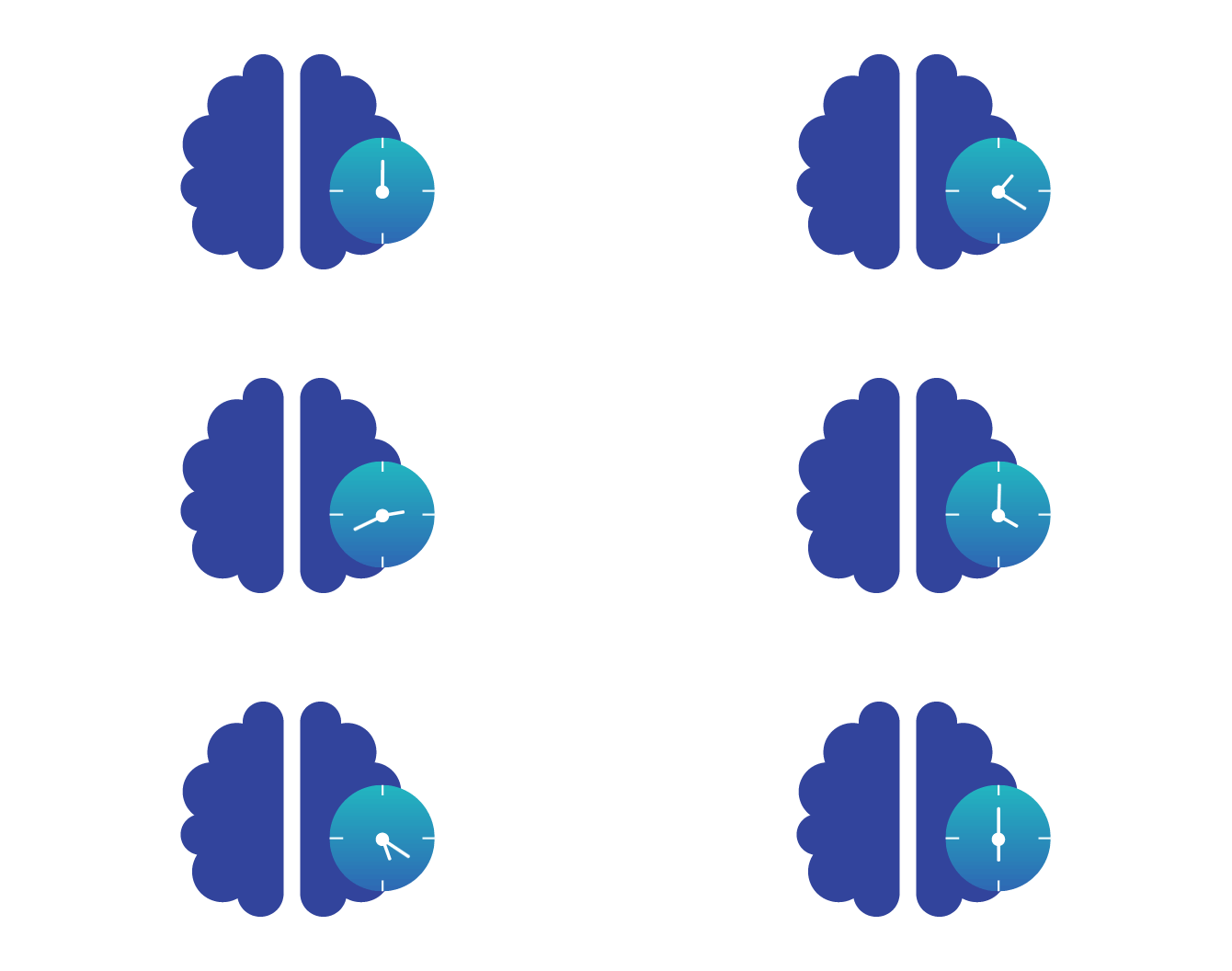
Memory saccades are when you observe a visually guided stimulus or pattern and then have to reproduce it. This activity makes use of many brain functions including attention, eye movement accuracy, working memory and visual short-term memory. They are virtually a full brain activity.

OPK
OPK or the optokinetic response is a combination of a slow-phase and fast-phase eye movements. OPK can be used for reflexive eye movements. Use the OPK option with a practitioner or coach to get personalized options and the most out of your training.

Hemistim
Hemistim is a way of providing visual stimulation. The stimulus is recognized and interpreted by the contralateral (opposite) side of your brain. Use hemstim with a practitioner or coach to get personalized options and the most out of your training.